
How to Remineralize Teeth Naturally: The Complete Guide
|
|
Time to read 9 min

|
|
Time to read 9 min
Here is something most people do not realize about their teeth: enamel is not permanently fixed. It is constantly going through a process of losing and gaining minerals throughout the day, and whether it comes out ahead or behind depends entirely on what you eat, what you brush with, and how well you care for your mouth.
This process is called remineralization, and understanding it is one of the most important things you can do for your long-term dental health. When remineralization wins, your enamel stays strong and cavities do not form. When demineralization wins, enamel weakens, sensitivity increases, and cavities eventually develop.
The good news is that you have far more control over this process than most people think. Here is everything you need to know about how to remineralize teeth naturally.
Remineralization is the natural process by which minerals are redeposited into tooth enamel after being lost through acid exposure. It is the counterpart to demineralization, the process by which acids dissolve mineral content out of enamel.
These two processes happen continuously. Every time you eat or drink something acidic or sugary, bacteria in your mouth produce acids that draw minerals out of your enamel. In between meals, saliva works to neutralize those acids and deposit minerals back in. Your enamel is essentially in a constant state of flux.
The critical point is this: remineralization can only repair enamel in its early stages of weakening. Once a cavity has fully formed and progressed through the enamel into the dentin beneath, remineralization cannot reverse it. That is when you need a dentist. But in the early stage, when enamel has lost mineral content but the structure is still largely intact, natural remineralization can rebuild it.
Your teeth will often signal early-stage demineralization before a cavity develops. Watch for:
If your dentist has ever told you to "keep an eye on" a particular tooth, that is exactly the situation where consistent remineralization habits can make a measurable difference.
This is the single most impactful change you can make to support remineralization.
Hydroxyapatite is a calcium phosphate mineral that makes up approximately 97 percent of tooth enamel and 70 percent of dentin. When you brush with a hydroxyapatite toothpaste, you are directly supplying your enamel with the exact mineral it needs to repair and strengthen itself. The hydroxyapatite particles integrate into the enamel surface, filling in microscopic gaps left by demineralization.
This is what makes hydroxyapatite fundamentally different from other toothpaste ingredients. It does not just clean the surface — it actively participates in rebuilding enamel structure. Clinical studies have shown hydroxyapatite to be as effective as fluoride for remineralization, with the added advantage of no toxicity concerns at any dose.
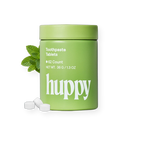
Hydroxyapatite has been used in Japanese oral care products for decades and has an extensive clinical research base supporting its safety and effectiveness. It is the active remineralizing ingredient in Huppy toothpaste tablets.
Every time acidic or sugary foods contact your teeth, they trigger a demineralization episode. The more frequently this happens throughout the day, the less time your saliva has to neutralize acids and begin remineralization between exposures.
The biggest culprits include:
It is not that you need to eliminate these foods entirely. The frequency of exposure matters more than the total quantity. Sipping on a sugary drink over two hours causes significantly more demineralization than drinking the same amount in one sitting, because it keeps your mouth in a continuous acidic state rather than allowing remineralization periods in between.
Saliva is your mouth's natural remineralization system. It neutralizes acids, delivers calcium and phosphate ions to enamel, and creates the conditions necessary for remineralization to occur. A dry mouth is a mouth that cannot remineralize effectively.
To support healthy saliva production:
Certain foods actively support your enamel by providing the minerals your teeth need and creating a less acidic oral environment:
How you brush matters as much as what you brush with when it comes to remineralization.
Remineralization requires raw materials, and if your body is deficient in the key minerals involved, the process will be compromised regardless of what you brush with.
The most important nutrients for enamel remineralization are:
If your diet is consistently low in any of these nutrients, supplementation under the guidance of a healthcare provider is worth considering.
Xylitol is a naturally occurring sugar alcohol that actively supports remineralization in two ways. First, it cannot be fermented by Streptococcus mutans, the primary bacteria responsible for tooth decay, which means it does not contribute to the acid production that drives demineralization. Second, xylitol has been shown to inhibit S. mutans directly, reducing the overall population of cavity-causing bacteria in the mouth over time.
Regular exposure to xylitol through toothpaste, sugar-free gum, or mints creates a less acidic oral environment that is more conducive to remineralization. It is one of the few ingredients that genuinely earns its place in clean toothpaste.
It is important to be clear about the limits of natural remineralization so expectations are realistic.
Remineralization works on early-stage enamel weakening, white spot lesions, and incipient cavities that have not yet broken through the enamel surface. Once a cavity has progressed beyond this stage, remineralization cannot reverse it. You will need a dentist.
Remineralization also cannot rebuild enamel that has been physically worn away through erosion or abrasion. It replenishes minerals within existing enamel structure but cannot grow new enamel where none exists.
This is why consistent daily habits matter more than any single intervention. The goal is to keep your enamel ahead of the demineralization curve on a daily basis, not to wait until problems appear and then try to reverse them.
Tooth enamel cannot regenerate from scratch, but it can remineralize; meaning lost minerals can be redeposited into weakened enamel before a cavity fully forms
Remineralizing teeth naturally involves a combination of the right toothpaste ingredients, dietary choices, and daily habits
Hydroxyapatite is the most evidence-backed ingredient for remineralization, as it is the same mineral that makes up tooth enamel
Diet plays a major role; acidic and sugary foods accelerate demineralization while certain foods actively support remineralization
Catching early-stage enamel weakening before it becomes a cavity is the key window for natural remineralization to work
Remineralizing teeth naturally is entirely possible with the right combination of toothpaste, diet, and daily habits. The process is not complicated, but it does require consistency.
The most impactful single change you can make is switching to a hydroxyapatite toothpaste. By directly supplying your enamel with its own building blocks twice a day, you are giving your teeth the best possible conditions to repair and strengthen themselves. Everything else, including dietary changes, xylitol, hydration, and proper brushing technique, builds on that foundation.
Your enamel is remarkably capable of repairing itself when given the right environment. The goal of a good oral care routine is simply to create that environment every day.
Plastic-free. Hydroxyapatite-powered. Dentist-approved. Shop Huppy Toothpaste Tablets →
Yes, in the early stages of enamel weakening. Remineralization is a natural biological process that occurs continuously, and you can support it significantly through the right toothpaste ingredients, diet, and habits. It cannot reverse fully formed cavities, but it can repair early-stage mineral loss before a cavity develops.
Early-stage remineralization can begin within days of improving your oral care routine, but meaningful structural repair of weakened enamel typically takes weeks to months of consistent effort. White spot lesions, for example, can visibly improve over several months of consistent hydroxyapatite toothpaste use.
Clinical research has shown hydroxyapatite to be comparable to fluoride in remineralization effectiveness. The key advantage of hydroxyapatite is that it is bioidentical to tooth enamel, meaning it integrates directly into enamel structure, and it carries no toxicity concerns at any dose. For people who prefer to avoid fluoride, hydroxyapatite is the most evidence-backed alternative available.
Dairy products, leafy greens, nuts, fatty fish, and eggs are among the most supportive foods for remineralization. They provide calcium, phosphorus, vitamin D, and other nutrients essential for enamel repair. Reducing acidic and sugary foods is equally important since these drive demineralization.
Oil pulling has some evidence for reducing harmful oral bacteria, which creates a more favorable environment for remineralization. However, it does not directly supply remineralizing minerals to enamel and should not be considered a substitute for hydroxyapatite toothpaste or other evidence-backed remineralization strategies.
Yes. Children's teeth respond to remineralization just as adult teeth do. For children who are prone to cavities or have white spot lesions, hydroxyapatite toothpaste is particularly worth considering since it is safe regardless of how much is swallowed, unlike fluoride which requires careful dosing in young children.
Xylitol supports remineralization indirectly by reducing cavity-causing bacteria and creating a less acidic oral environment. It does not directly deposit minerals into enamel the way hydroxyapatite does, but it is a valuable part of a complete remineralization strategy.
The Huppy Team
The Huppy team is obsessed with making oral care better — for your mouth and for the planet. We make fluoride-free, plastic-free toothpaste and mouthwash tablets because we believe what goes in your mouth matters just as much as what ends up in a landfill. Everything we write is rooted in real research and a genuine commitment to cleaner ingredients.


