
Is Your Toothpaste Giving You Canker Sores? What You Need to Know About SLS
|
|
Time to read 9 min

|
|
Time to read 9 min
Table of contents
You brush your teeth twice a day, every day. It is one of the most automatic, well-intentioned habits in your health routine. So, it might come as a surprise to learn that the toothpaste you have been faithfully using could be the reason you keep getting canker sores.
Canker sores, those small, painful ulcers that appear inside your mouth, cheeks, lips, or under your tongue, are miserable. They make eating uncomfortable, talking irritating, and they seem to show up at the worst possible times. Most people blame stress, spicy food, or bad luck. But for a significant portion of the population, the trigger is hiding in plain sight on the bathroom counter.
The culprit is an ingredient called sodium lauryl sulfate, commonly abbreviated as SLS. It is in the vast majority of mainstream toothpastes, and clinical research has repeatedly linked SLS toothpaste to canker sores; increased frequency, longer duration, and more pain. Here is what the science actually says, and what you can do about it.
Sodium lauryl sulfate is a synthetic detergent and surfactant, meaning it is designed to break down oils, lift debris, and create foam. It is the same class of ingredient found in shampoos, body washes, dish soap, and household cleaning products. In toothpaste, it does one primary job: make the paste foam up when you brush.
That foam does not actually clean your teeth better. It is largely a sensory experience, something that makes brushing feel more thorough and satisfying. Toothpaste manufacturers have known for decades that consumers associate foam with effectiveness, so SLS became a standard ingredient across the industry.
The problem is that SLS is a powerful chemical irritant. What it does to grease on a dish, it also does, to a lesser but still meaningful degree, to the delicate tissue inside your mouth.
Your mouth is lined with a layer of mucous membrane, a protective barrier that shields the underlying tissue from physical irritation, bacteria, and chemical exposure. This mucosal layer produces a protective film called mucin, a glycoprotein that acts as a first line of defense for your oral tissue.
When SLS enters the mouth during brushing, it acts as a denaturant, meaning it breaks down and disrupts protein structures. Research published in peer-reviewed dental journals has shown that SLS degrades this mucin layer, stripping away the protective coating on the oral epithelium and leaving the underlying tissue directly exposed. Once that barrier is compromised, the tissue becomes far more vulnerable to microtrauma, bacteria, and inflammatory responses.
A scoping review published in the American Journal of Dentistry catalogued the known side effects of SLS from toothpaste and found documented cases of mucosal desquamation (peeling of the mouth lining), inflammation of the oral mucosa, ulcerations, and toxic reactions within the oral cavity.
In simple terms: every time you brush with an SLS-containing toothpaste, you are chemically stripping a layer of your mouth's natural defense system. For most people, this happens quickly enough that they never connect the dots. For people who are prone to canker sores, it can be the direct trigger.
This is not a fringe theory. The connection between SLS toothpaste and canker sores has been examined in multiple independent clinical trials, and the results consistently point in the same direction.
One of the earliest and most cited studies had 10 patients with recurrent canker sores use an SLS-containing toothpaste for three months, then switch to an SLS-free toothpaste for another three months. The results were striking: patients averaged 14.3 ulcers while using the SLS toothpaste, and just 5.1 ulcers after switching to the SLS-free version. That is a 64% reduction in canker sore occurrence simply by changing toothpaste. The researchers concluded that SLS's ability to denature the oral mucin layer was the likely cause of increased ulcers.
A 2019 systematic review published in the Journal of Oral Pathology and Medicine analyzed four separate crossover clinical trials involving 124 participants. The findings were consistent across all four studies: SLS-free toothpaste significantly reduced the number of ulcers, the duration of each ulcer, the number of episodes, and the pain associated with canker sores. The authors concluded that patients with recurrent canker sores may directly benefit from switching to an SLS-free toothpaste for their daily oral care.
Beyond triggering ulcers, research also suggests that SLS may slow the healing of existing wounds in the mouth. Studies have found that SLS is cytotoxic to fibroblasts and epithelial cells, the very cell types responsible for tissue repair. People who have had dental surgery or other oral procedures may find their recovery is longer when using SLS-containing toothpaste.
Not everyone who uses SLS toothpaste will get canker sores. Sensitivity to SLS varies by individual, and some people show no negative response at all. But certain groups appear to be significantly more vulnerable:
The honest answer is cost and consumer expectation. SLS is cheap, effective as a cleaning agent, and produces the foam that people have been conditioned to associate with clean teeth. Most people never make the connection between their toothpaste and their canker sores because both things feel like separate, unrelated problems.
The oral care industry has not had a strong incentive to reformulate. Until recently, SLS-free options were rare and often inferior in texture and experience. The conversation is shifting now, particularly in the natural and wellness oral care space, but SLS remains the default in virtually every major drugstore brand.
If you have been getting canker sores for years without identifying a clear trigger, your toothpaste is a very reasonable place to start looking.
The good news is that you do not need SLS to get a genuinely clean mouth. The foam SLS creates is cosmetic. The actual cleaning comes from mechanical brushing, the abrasive action of brushing combined with the right active ingredients.
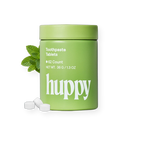
Huppy toothpaste tablets are completely SLS-free. No surfactants, no synthetic detergents, no foam-for-the-sake-of-foam. Instead, we rely on ingredients that are actually doing something: hydroxyapatite for remineralization and enamel strengthening, xylitol to fight cavity-causing bacteria, and natural mint for a clean, fresh finish.
Our tablets are also free from parabens, artificial sweeteners, artificial colors, and microplastics. And because they come in compostable packaging instead of a plastic tube, switching to Huppy is good for your mouth and for the planet.
For people who have dealt with recurring canker sores for years and tried everything else, switching toothpaste is often the last thing they think to do. Based on the evidence, it should probably be the first.
Ditching SLS toothpaste is the most evidence-backed change you can make for canker sores, but it is worth pairing it with a few other habits:
Canker sores are painful, disruptive, and frustratingly common. And for a meaningful portion of the people who get them regularly, the cause is not stress or diet or bad luck. It is SLS toothpaste, an ingredient that has been sitting in their bathroom for years, silently stripping away the protective lining of their mouth twice a day.
The clinical evidence is consistent: making the switch away from SLS toothpaste for canker sores significantly reduces frequency, duration, and pain. It is one of the simplest, lowest-risk interventions available, and it costs nothing more than a new tube (or a box of tablets).
Your mouth deserves ingredients that actually protect it. Not detergents designed to degrease industrial equipment.
SLS (sodium lauryl sulfate) is a foaming agent in most toothpastes that strips your mouth's protective mucin layer
Clinical trials show switching to SLS-free toothpaste reduces canker sores by up to 64%
Huppy toothpaste tablets are completely SLS-free and use hydroxyapatite and xylitol instead
Most people see improvement within 4–8 weeks of switching
Plastic-free. SLS-free. Canker-sore-unfriendly. Shop Huppy Toothpaste Tablets →
Clinical research says yes, for many people. Multiple independent trials have shown that switching from SLS toothpaste to an SLS-free alternative significantly reduces canker sore frequency, duration, and pain. SLS works by stripping the protective mucin layer inside your mouth, leaving tissue more vulnerable to ulceration. It is not the cause for everyone, but if you get canker sores regularly and haven't identified a trigger, SLS toothpaste is the first thing worth changing.
Most people notice a meaningful reduction within 4–8 weeks of switching. The landmark clinical study found that patients averaged 64% fewer canker sores after just three months on an SLS-free toothpaste. Individual results vary, but because SLS is a daily exposure, removing it consistently tends to produce noticeable improvement relatively quickly.
Check the ingredients label for "sodium lauryl sulfate" or "sodium laureth sulfate" (SLES), a closely related compound. Both are surfactants used to create foam. If either appears on your toothpaste's ingredient list, your toothpaste contains SLS. The vast majority of mainstream drugstore brands — including many marketed as "natural" — contain one or both.
Yes. The foam that SLS creates is cosmetic, it does not contribute to how well your teeth get cleaned. The actual cleaning comes from the mechanical action of brushing combined with active ingredients like hydroxyapatite, fluoride, or xylitol. Huppy toothpaste tablets are SLS-free and rely on hydroxyapatite for remineralization and xylitol to fight cavity-causing bacteria — no surfactants needed.
Yes. Research has linked SLS to mucosal desquamation (peeling of the mouth lining), gum irritation, inflammation of the oral mucosa, and slowed wound healing after dental procedures. SLS has also been shown to temporarily interfere with taste perception by breaking down phospholipids on taste receptors — which is why food can taste strange immediately after brushing. For people with sensitive mouths, gums, or a history of oral tissue issues, SLS-free toothpaste is worth considering regardless of canker sore history.
The Huppy Team
The Huppy team is obsessed with making oral care better — for your mouth and for the planet. We make fluoride-free, plastic-free toothpaste and mouthwash tablets because we believe what goes in your mouth matters just as much as what ends up in a landfill. Everything we write is rooted in real research and a genuine commitment to cleaner ingredients.


