
Sorbitol in Toothpaste: Should You Be Worried?
|
|
Time to read 7 min

|
|
Time to read 7 min
Table of contents
Scan the ingredient list on almost any conventional toothpaste and one ingredient shows up near the top: sorbitol. It is one of the most common additives in oral care products, and yet most people have no idea what it is or why it is there.
Sorbitol in toothpaste is not as controversial as SLS or triclosan, but it is not entirely benign either. It serves a real purpose, but there are better alternatives that do the same job while actively supporting oral health. Here is what you should know.
Sorbitol is a sugar alcohol, which is a category of carbohydrate that occurs naturally in some fruits and can also be manufactured commercially. Despite the name, sugar alcohols are neither sugar nor alcohol in the conventional sense. They are a class of compounds with a chemical structure partially resembling both.
Commercially, sorbitol is typically produced from corn syrup. It has roughly 60 percent the sweetness of table sugar and is widely used in food, pharmaceutical, and personal care products as a sweetener and moisture-retaining agent.
Sorbitol in toothpaste serves two main functions:
1. As a humectant
Humectants are ingredients that attract and retain moisture. In toothpaste, sorbitol prevents the paste from drying out inside the tube and becoming unusable. Without a humectant, toothpaste would harden within weeks of opening. This is sorbitol's primary role in most formulations.
2. As a sweetener
Toothpaste needs to taste reasonably pleasant or people will not use it consistently. Sorbitol contributes a mild sweetness that improves palatability. It is often used alongside other sweeteners like saccharin for a more rounded flavor profile.
Sorbitol is typically one of the first few ingredients listed on a conventional toothpaste label, meaning it makes up a significant portion of the formula.
Here is where the answer gets nuanced.
Sorbitol does not directly cause cavities the way regular sugar does. Unlike sucrose, sorbitol cannot be rapidly fermented by Streptococcus mutans, the primary cavity-causing bacteria. On that specific point, sorbitol is a safer sweetener choice than regular sugar in oral care products.
However, there are a few important caveats:
Sorbitol is not bacterially inert
While S. mutans cannot easily ferment sorbitol, other oral bacteria can, particularly with extended exposure. Studies have shown that bacteria adapt over time to metabolize sorbitol, which means regular long-term use can gradually reduce its dental safety benefits. This is a meaningful difference from xylitol, which genuinely cannot be fermented by cavity-causing bacteria regardless of how long it is used.
It does not provide any active oral health benefit
Unlike xylitol, which actively inhibits cavity-causing bacteria and supports remineralization, sorbitol is essentially neutral at best. It does not hurt, but it does not help either. For an ingredient that makes up a significant portion of the formula, neutral is underwhelming.
Prolonged contact time matters
The longer sorbitol sits on teeth, the more opportunity adapted bacteria have to ferment it. This is a particular concern for children who may not rinse effectively or who swallow more toothpaste than adults.
Sorbitol is known to cause digestive issues in some individuals, including:
These effects are dose-dependent and typically occur with larger amounts than you would get from toothpaste alone. However, for people with conditions like irritable bowel syndrome (IBS) or those sensitive to FODMAPs (fermentable carbohydrates), even small amounts of swallowed sorbitol can trigger symptoms.
Children are particularly worth flagging here because they swallow more toothpaste than adults and their smaller body size means proportionally higher exposure. If your child has unexplained digestive issues, checking whether their toothpaste contains sorbitol is a reasonable step.
For most adults using toothpaste as intended, spitting it out and rinsing, the levels of sorbitol in toothpaste are not a meaningful health concern based on current evidence. The FDA classifies sorbitol as Generally Recognized as Safe (GRAS), and it is approved for use in food and personal care products worldwide.
The argument for avoiding it is not that it is dangerous. It is that it provides no oral health benefit, can be metabolized by adapted oral bacteria over time, and can cause digestive issues in sensitive individuals when swallowed. When a genuinely better alternative exists, choosing that alternative is a straightforward upgrade.
Xylitol is another sugar alcohol, similar to sorbitol in sweetness and humectant properties, but fundamentally different in how it interacts with oral bacteria.
Where sorbitol can eventually be fermented by adapted bacteria, xylitol cannot be fermented by Streptococcus mutans under any circumstances. The bacteria simply lack the enzymes required to metabolize it. Beyond being neutral, xylitol actively inhibits the growth of cavity-causing bacteria and has been shown in long-term studies to reduce overall bacterial populations in the mouth.
Xylitol also stimulates saliva production, which supports remineralization and helps neutralize acids. It is one of the few toothpaste ingredients that genuinely earns its place in the formula.
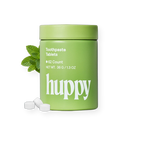
Huppy toothpaste tablets are sweetened with xylitol and contain no sorbitol, no saccharin, and no artificial sweeteners. The humectant function in a tablet is also unnecessary since the product is dry by design, meaning the whole category of ingredient can be eliminated.
Sorbitol in toothpaste is a sugar alcohol used as both a sweetener and a humectant to keep the paste from drying out
It is generally recognized as safe by the FDA and does not directly harm teeth the way regular sugar does
However, sorbitol can be fermented by certain oral bacteria over time, which means it is not entirely neutral for oral health
Sorbitol can also cause digestive issues in sensitive individuals, especially when swallowed in larger amounts
Xylitol is a similar sugar alcohol that actively benefits oral health and is a better alternative in toothpaste
Sorbitol in toothpaste is not the most alarming ingredient on the label, but it is one of the least impressive. It does not actively harm your teeth, but it also does not help. It can cause digestive issues for some people, and over extended use, adapted bacteria can metabolize it in ways that reduce its dental safety advantage.
When xylitol exists and offers genuine oral health benefits without any of the downsides, choosing a sorbitol-free toothpaste with xylitol is an easy upgrade. If you are already evaluating your toothpaste ingredients, sorbitol is worth putting on the list to swap out.
Plastic-free. Hydroxyapatite-powered. Dentist-approved. Shop Huppy Toothpaste Tablets →
For most adults using toothpaste as intended, yes. Sorbitol is classified as Generally Recognized as Safe by the FDA, and the levels used in toothpaste do not pose a significant health risk when the product is spit out rather than swallowed. However, it offers no oral health benefit, and alternatives like xylitol are a better choice.
Sorbitol does not directly cause cavities the way regular sugar does. However, over time, certain oral bacteria can adapt to ferment sorbitol, which reduces its dental safety advantage. Xylitol is the only sugar alcohol that bacteria truly cannot ferment and is a better choice for long-term oral health.
Sorbitol serves two purposes in toothpaste. It acts as a humectant to keep the paste from drying out inside the tube, and it contributes mild sweetness to make the product more palatable.
Both are sugar alcohols and both are used as sweeteners, but they behave differently in the mouth. Sorbitol can eventually be fermented by adapted oral bacteria. Xylitol cannot be fermented by cavity-causing bacteria under any circumstances and actively inhibits their growth. Xylitol is the better choice for oral health.
Yes, sorbitol can cause gas, bloating, cramping, and diarrhea in sensitive individuals, especially when consumed in larger amounts. These effects are typically dose-dependent but can occur at lower exposures in people with IBS or FODMAP sensitivities.
Children swallow more toothpaste than adults, which increases their proportional exposure to any ingredient in the formula. Given that children are more prone to digestive sensitivity and that xylitol is a better alternative, choosing a sorbitol-free toothpaste for children is reasonable.
Sorbitol occurs naturally in some fruits like apples and pears. However, the sorbitol used in toothpaste and food products is typically manufactured from corn syrup through an industrial process. It is a synthetically produced version of a compound that also exists in nature.
Xylitol is the gold standard toothpaste sweetener. It is naturally derived, actively inhibits cavity-causing bacteria, stimulates saliva production, and has a strong clinical research base supporting its safety and effectiveness.
The Huppy Team
The Huppy team is obsessed with making oral care better — for your mouth and for the planet. We make fluoride-free, plastic-free toothpaste and mouthwash tablets because we believe what goes in your mouth matters just as much as what ends up in a landfill. Everything we write is rooted in real research and a genuine commitment to cleaner ingredients.


