
Sensitive Teeth from Cold Drinks? Hydroxyapatite Toothpaste Can Help
|
|
Time to read 9 min

|
|
Time to read 9 min
Table of contents
You pour a glass of ice water. You take a sip. And there it is: that sharp, electric zing that shoots through your tooth and makes you put the glass down. Or maybe it is a glass of orange juice, or a cold smoothie from the fridge. Whatever the trigger, the pattern is the same. Your teeth are telling you something is wrong.
Tooth sensitivity is one of the most common and most ignored oral health problems out there. According to the Academy of General Dentistry, more than 40 million Americans live with it. A separate European study found that 1 in 2 adults experience it at some point. So if your teeth ache when it is cold, hot, or acidic, you are far from alone.
The better question is: what actually causes it, and what can you do about it at home, starting today? That is where hydroxyapatite comes in. Hydroxyapatite toothpaste has become one of the most talked-about solutions for sensitive teeth, and the science behind it is worth understanding before you make the switch.
To understand why hydroxyapatite works, you first need to understand why sensitivity happens in the first place.
Your teeth are made up of multiple layers. The outer layer is enamel, the hardest substance in the human body. Beneath the enamel is dentin, a softer layer filled with microscopic channels called dentinal tubules. These tubules run directly toward the nerve of the tooth.
When your enamel is thick and healthy, those tubules stay sealed. But when enamel erodes or gums recede, the tubules become exposed. Now, when something cold, hot, sweet, or acidic touches your tooth, it moves fluid inside those tiny channels. That fluid movement stimulates the nerve, and you feel that sharp, familiar zing.
Enamel erosion can happen from a lot of directions: acidic foods and drinks like orange juice, coffee, and soda, aggressive brushing, teeth grinding, whitening treatments, or simply years of wear. Once enamel is gone, it does not grow back on its own. But it can be rebuilt, and that is exactly what hydroxyapatite toothpaste does.
Hydroxyapatite (HAp) is not a lab invention cooked up for a marketing campaign. It is the mineral your teeth are literally made of. Your enamel is approximately 97% hydroxyapatite by weight. Your bones are about 60% hydroxyapatite. It is the structural foundation of your entire skeletal system.
Its origin story is actually fascinating. NASA developed synthetic hydroxyapatite in the 1970s because astronauts in zero gravity were losing mineral density in their teeth and bones. A Japanese company purchased the technology from NASA in 1970, and the first commercially available hydroxyapatite toothpaste launched shortly after. Japan approved it as an anti-cavity agent in 1993, and it has since expanded globally.
When you brush with hydroxyapatite toothpaste, those particles are attracted to your enamel the way a magnet finds metal. Because the substance is biocompatible and biomimetic, meaning it mimics your body's own tissue, it bonds naturally with tooth structure. Like is attracted to like.
Hydroxyapatite does not just mask sensitivity the way some older toothpaste ingredients do. It addresses the root structural issue in two distinct ways.
Nano-hydroxyapatite particles are smaller than the diameter of dentinal tubules. That matters because they can physically enter the openings and form a plug that seals them off. When the tubule is sealed, temperature changes and acidic triggers can no longer move fluid through the channel, and the nerve cannot be stimulated. Clinical research has confirmed that nano-hydroxyapatite is superior to both placebo and fluoride toothpaste in occluding these channels.
Sealing tubules is the short-term fix. Remineralization is the long game. Hydroxyapatite deposits calcium and phosphate, the exact building blocks of enamel, back into the tooth surface. This process reverses demineralization and structurally strengthens the enamel over time.
One clinical study found that people using nano-hydroxyapatite toothpaste experienced significant reductions in cold air sensitivity and tactile sensitivity after just two weeks of use. Another study showed that patients with significant dentin hypersensitivity experienced a 70 to 84% improvement after two weeks of twice-daily use.
Most popular sensitivity toothpastes rely on potassium nitrate as their active ingredient. Potassium nitrate works by depolarizing the pulpal nerves, essentially numbing the nerve signal so you feel less pain. It interrupts the sensation rather than fixing the structure.
Hydroxyapatite takes a structural approach. Instead of quieting the nerve signal, it physically addresses why the signal is happening in the first place, by sealing the tubules and rebuilding enamel. Multiple randomized controlled trials have found nano-hydroxyapatite to be superior to potassium nitrate in reducing dentin hypersensitivity.
Fluoride, the other dominant desensitizing approach, works similarly to hydroxyapatite in terms of remineralization, but fluoride cannot desensitize teeth in the same way that hydroxyapatite can. Hydroxyapatite is the only ingredient that both remineralizes and physically occludes the dentinal tubules.
Orange juice has a pH of around 3.5. Coffee sits around 4.5 to 5. Both are well below the 5.5 threshold at which enamel starts to demineralize. When you drink something acidic, it temporarily softens the enamel surface and leaches minerals out of it. With time, this exposes more of the dentin below.
This is why acidic drinks tend to make sensitivity worse over time, not just in the moment. It is also why a structural remineralization strategy, rather than a numbing one, makes more sense as a long-term fix.
If you are regularly drinking acidic beverages, rinsing with water immediately after can help neutralize the acid and slow demineralization. Pairing that with a hydroxyapatite toothpaste gives your enamel the best shot at keeping up with the daily acid load.
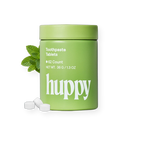
Most hydroxyapatite toothpastes come in the standard plastic tube format. Huppy is different. Our hydroxyapatite toothpaste tablets deliver the same evidence-backed formulation in a package that generates zero plastic waste.
You bite the tablet, start brushing with a wet toothbrush, and it transforms into a foam that works exactly like conventional toothpaste. No squeezing, no mess, no 400-million-tube-per-year contribution to the global plastic crisis.
For health-conscious consumers, the formula matters but so does what you are not putting into your body or onto the planet. Huppy tablets are free from SLS, artificial sweeteners, parabens, and microplastics. They are dentist-approved and designed for people who want both clinical results and a clean ingredient list.
If tooth sensitivity has been holding you back from enjoying your morning smoothie or your post-workout cold water, a twice-daily hydroxyapatite routine is the cleanest, most science-backed fix available without a dentist visit.
To get the most out of your hydroxyapatite toothpaste, follow these five habits:
Hydroxyapatite toothpaste is a powerful at-home tool, but it is not a substitute for professional care when something more serious is going on. See a dentist if:
These can be signs of a cavity, a cracked tooth, or pulpitis, all of which require professional treatment. Hydroxyapatite toothpaste helps with enamel-level sensitivity, not structural tooth damage.
Tooth sensitivity happens when enamel erodes and exposes dentinal tubules that lead to the nerve
Hydroxyapatite is the mineral your teeth are actually made of, making it uniquely effective at rebuilding enamel
Nano-hydroxyapatite physically seals dentinal tubules and remineralizes enamel simultaneously
Clinical studies show up to 84% improvement in sensitivity after just two weeks of use
Huppy hydroxyapatite toothpaste tablets deliver the same results with zero plastic waste and no SLS
Sensitive teeth are not just a minor annoyance. They change what you eat, what you drink, and how freely you can enjoy your day. The standard response of reaching for a numbing toothpaste is an old solution to a structural problem.
Hydroxyapatite addresses that problem at the source. It seals the channels that transmit pain signals and rebuilds the enamel that was keeping those channels closed in the first place. It is the only toothpaste ingredient that does both simultaneously, and the clinical evidence supporting it keeps growing.
If you are ready to actually fix the problem instead of just quieting it, give Huppy's hydroxyapatite toothpaste tablets a try. Your morning OJ has been waiting.
Plastic-free. Hydroxyapatite-powered. Dentist-approved. Shop Huppy Toothpaste Tablets →
Yes. Hydroxyapatite is biocompatible, meaning it is the same mineral your teeth and bones are naturally made of. It has been used in Japan as an approved anti-cavity agent since 1993 and has decades of clinical research behind it. Unlike some desensitizing ingredients that work by numbing the nerve, hydroxyapatite works by rebuilding tooth structure, making it safe and beneficial for twice-daily long-term use.
Most people notice a meaningful improvement within two weeks of consistent twice-daily use. Clinical studies have shown up to 84% reduction in dentin hypersensitivity at the two-week mark. For more significant enamel erosion, continued use over three months produces even stronger results. The key is consistency — hydroxyapatite works cumulatively, building up the enamel layer with each brushing session.
For many people, yes. Hydroxyapatite remineralizes enamel using the same calcium and phosphate building blocks your teeth are made of, and multiple studies have shown it to be comparable to fluoride in cavity prevention. Unlike fluoride, hydroxyapatite also physically seals dentinal tubules to reduce sensitivity, which fluoride cannot do. If you prefer a fluoride-free option for any reason, hydroxyapatite is the most clinically supported alternative available.
The difference is particle size. Nano-hydroxyapatite particles are small enough to physically enter and plug the microscopic dentinal tubules that cause sensitivity. Regular hydroxyapatite particles are too large to do this effectively. The nano form also integrates more seamlessly with the existing enamel surface, making remineralization more efficient. Most clinical studies on sensitivity and cavity prevention specifically use the nano form, which is what Huppy toothpaste tablets contain.
It can help manage the symptoms, but grinding (bruxism) is a mechanical problem that hydroxyapatite alone cannot solve. Grinding wears down enamel faster than it can be remineralized, so while a twice-daily hydroxyapatite routine will help rebuild and protect enamel between grinding episodes, you should also talk to your dentist about a night guard to address the root cause. Using hydroxyapatite toothpaste alongside a night guard gives you the best outcome for both protection and repair.
The Huppy Team
The Huppy team is obsessed with making oral care better — for your mouth and for the planet. We make fluoride-free, plastic-free toothpaste and mouthwash tablets because we believe what goes in your mouth matters just as much as what ends up in a landfill. Everything we write is rooted in real research and a genuine commitment to cleaner ingredients.


